
The biggest surprise the cinema world has encountered in 2025? The resurgence of horror as a main player at the British cinemas.
As a style, it has notably exceeded previous years with a 22% rise compared to last year for the UK and Ireland film earnings: £83,766,086 in 2025, versus £68.6 million last year.
“Last year, no horror film reached £10m at the UK or Irish box office. This year, five films have,” comments a cinema revenue expert.
The major successes of the year – a recent horror title (£11.4 million), Sinners (£16.2m), The Conjuring Last Rites (£14.98 million) and the sequel to a classic (£15.54 million) – have all stayed in the multiplexes and in the popular awareness.
Even though much of the professional discussion centers on the singular brilliance of certain directors, their triumphs indicate something evolving between moviegoers and the category.
“Many have expressed, ‘You should watch this even if horror isn’t your thing,’” says a head of acquisition.
“Such movies experiment with style and format to produce entirely fresh content, connecting with viewers on a new level.”
But apart from artistic merit, the consistent popularity of spooky films this year suggests they are giving cinemagoers something that’s much needed: catharsis.
“Currently, cinema mirrors the widespread anger, fear, and societal splits,” notes a film commentator.
“The genre masterfully exploits common anxieties, magnifying them so that everyday stresses fade beside the cinematic horror,” remarks a prominent scholar of classic monster stories.
In the context of a global headlines featuring conflict, immigration issues, political shifts, and climate concerns, ghosts, monsters, and mythical entities strike a unique chord with viewers.
“I read somewhere that the success of vampire movies is linked to economically depressed times,” comments an star from a recent horror hit.
“This symbolizes the way modern economies can exhaust human spirit.”
From film's inception, societal turmoil has shaped horror.
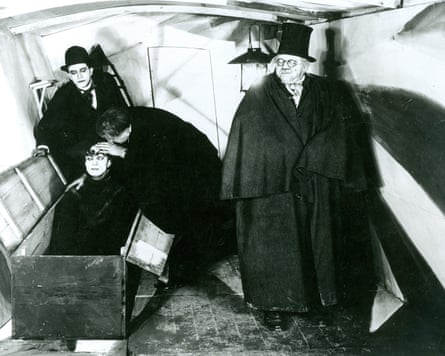
Experts point to the boom of European artistic movements after the WWI and the unstable environment of the early Weimar Republic, with films such as The Cabinet of Dr Caligari and the iconic vampire tale.
Later occurred the 1930s depression and Universal Studios’ Frankenstein and The Wolfman.
“Take Dracula: it depicts an Eastern European figure invading Britain, spreading a metaphorical infection that endangers local protagonists,” explains a commentator.
“So it reflects a lot of anxieties around immigration.”
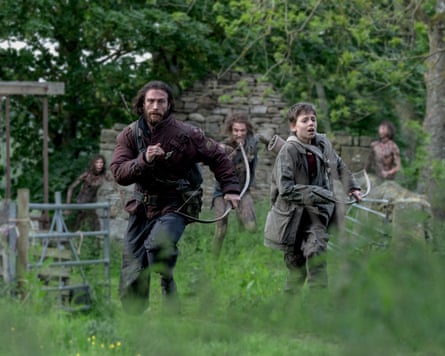
The phantom of border issues inspired the recently released rural fright The Severed Sun.
The filmmaker elaborates: “I wanted to explore ideas around the rise of populism. Firstly, slogans like ‘Let’s Make Britain Great Again’, that harken back to some fantasy time when things were ‘better’, but only if you were a rich white man.”
“Also, the concept of familiar individuals revealing surprising prejudices in casual settings.”
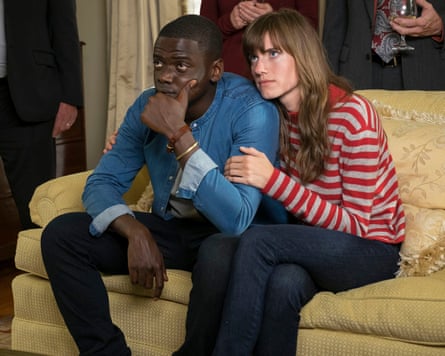
Arguably, the modern period of praised, culturally aware scary films began with a brilliant satire released a year after a polarizing administration.
It introduced a new wave of visionary directors, including several notable names.
“It was a hugely exciting time,” recalls a creator whose film about a murderous foetus was one of the period's key works.
“I think it was the beginning of an era when people were opening up to doing a really bonkers horror film which had arthouse aspirations.”
This creator, now penning a fresh horror script, notes: “In the last ten years, public taste has evolved to welcome bolder horror concepts.”
Concurrently, there has been a reappraisal of the genre’s less celebrated output.
In recent months, a independent theater opened in a major city, showing underground films such as a quirky horror title, a classic adaptation and the 1989 remake of the expressionist icon.
The renewed interest of this “rough and rowdy” genre is, according to the cinema founder, a straightforward answer to the calculated releases pumped out at the cinemas.
“This responds to the sterile output from major studios. Today's cinema is safer and more repetitive. Many popular movies feel identical,” he states.
“In contrast [these alternative films] are a bit broken. It’s like they’ve erupted out of someone’s subconscious and been planted out there without corporate interference.”
Scary movies continue to challenge the norm.
“These movies uniquely blend vintage vibes with contemporary relevance,” notes an expert.
Alongside the return of the mad scientist trope – with multiple versions of a literary masterpiece on the horizon – he predicts we will see scary movies in 2026 and 2027 reacting to our modern concerns: about artificial intelligence control in the near future and “monstrous metaphors in power structures”.
Meanwhile, a religious-themed scare film a forthcoming title – which depicts the events of holy family challenges after the messiah's arrival, and features celebrated stars as the sacred figures – is scheduled to debut in the coming months, and will undoubtedly cause a stir through the faith-based groups in the America.</


